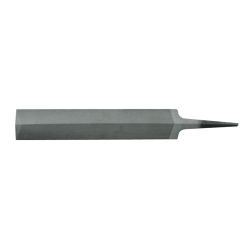
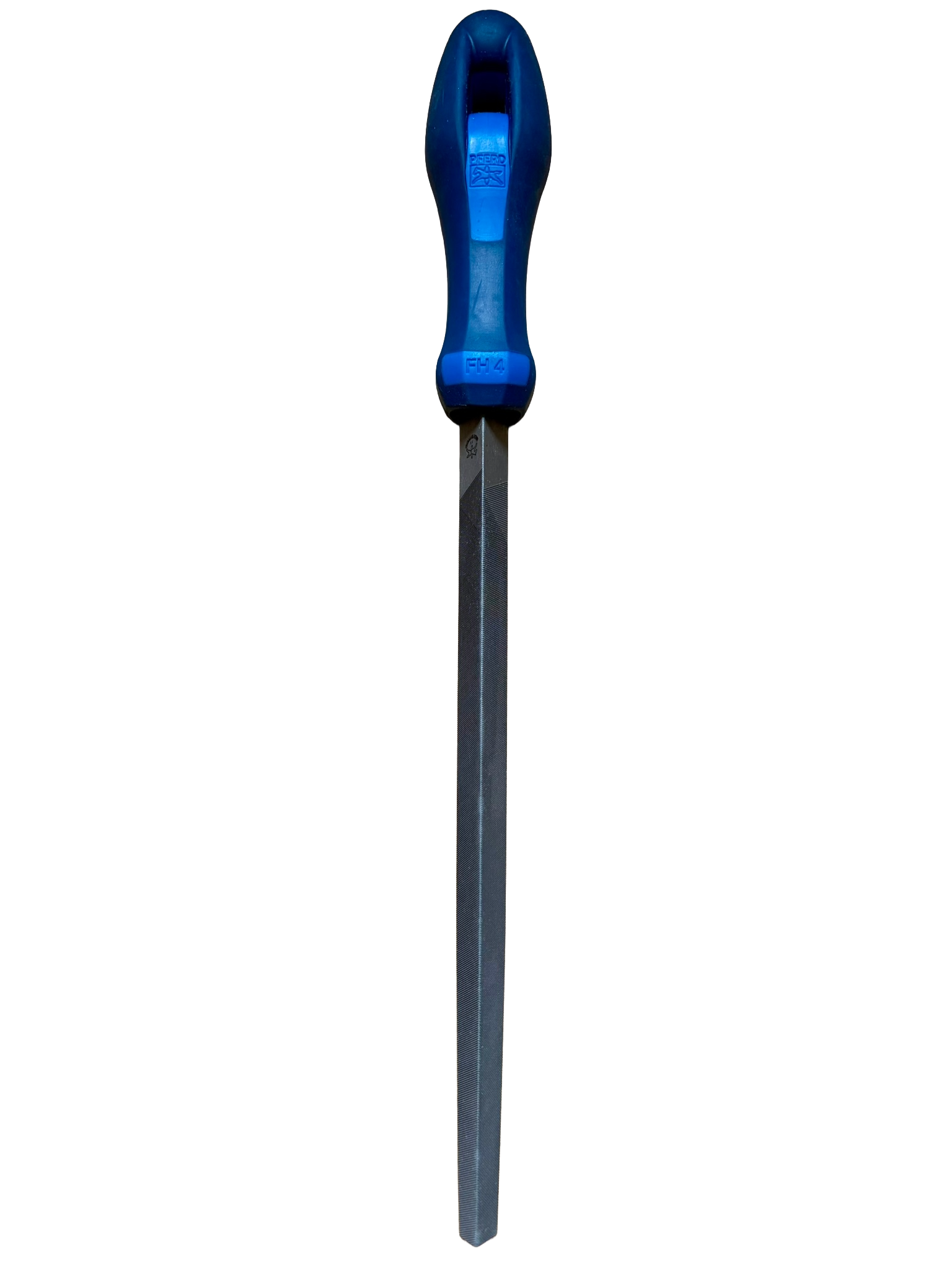


Pferd 200 mm fine triangular file, single cut (cut 3), designed to sharpen forged blades in hard steel (57 to 62 HRC) and reach corners and narrow areas. An essential tool for maintaining your axes, sickles and billhooks.
 A question?
The team is at your disposal for all your questions.
 Delivery
Thanks to our carriers, we deliver everywhere in France and Europe.
 Secure payment
Visa, Mastercard...
For a file to work, it must be harder than the steel it cuts: if both materials have similar hardness, the file skates without biting and wears out for nothing. That is why many entry-level files have no effect on the hardened steel of quality forged tools.
The Pferd 200 mm fine triangular file, single cut 3, is made from steel hard enough to bite into hardened steels between 57 and 62 HRC. Its triangular section gives it three faces and three edges, which reach the corners, grooves and narrow areas that a flat file cannot work. Its 200 mm length is a good balance between precision and control.
Made by Pferd in Germany, it is the natural companion to the forged axes, billhooks and sickles in our range.
| File | Shape | Length | Main use |
|---|---|---|---|
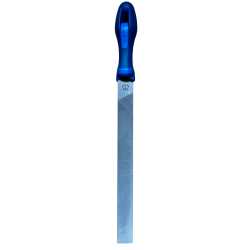
| Fine Flat File – 250 mm | Flat | 250 mm | Flat faces and straight edges of axes, billhooks and hoes |
| Fine triangular File – 200 mm | Triangular | 200 mm | Corners, grooves and narrow areas |
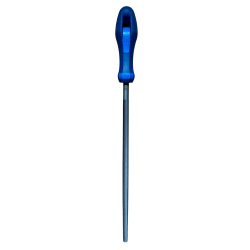
| Fine round File – 200 mm | Round | 250 mm | Inside curves, radii and holes |
A bastard file has a coarser cut: it removes a lot of metal and is used to rough-shape a badly damaged edge. A fine file like this one has finer teeth; it removes little metal and is used to touch up, maintain and finish an edge.
A file only cuts if it is harder than the steel it works on. Forged, hardened tools often reach a high hardness; this Pferd file is designed to bite into hardened steels between 57 and 62 HRC, which many cheap files cannot do.
The flat file suits flat faces and straight edges, the triangular file corners and narrow areas, and the round file inside curves and holes. To maintain a variety of tools, the three shapes complement each other.
First check that it is not clogged and clean it with a wire brush. If it still skates, its teeth may have been dulled, often by pressure on the return stroke or by contact with other tools.
Data sheet
You might also like
Pferd 200 mm fine triangular file, single cut (cut 3), designed to sharpen forged blades in hard steel (57 to 62 HRC) and reach corners and narrow areas. An essential tool for maintaining your axes, sickles and billhooks.