



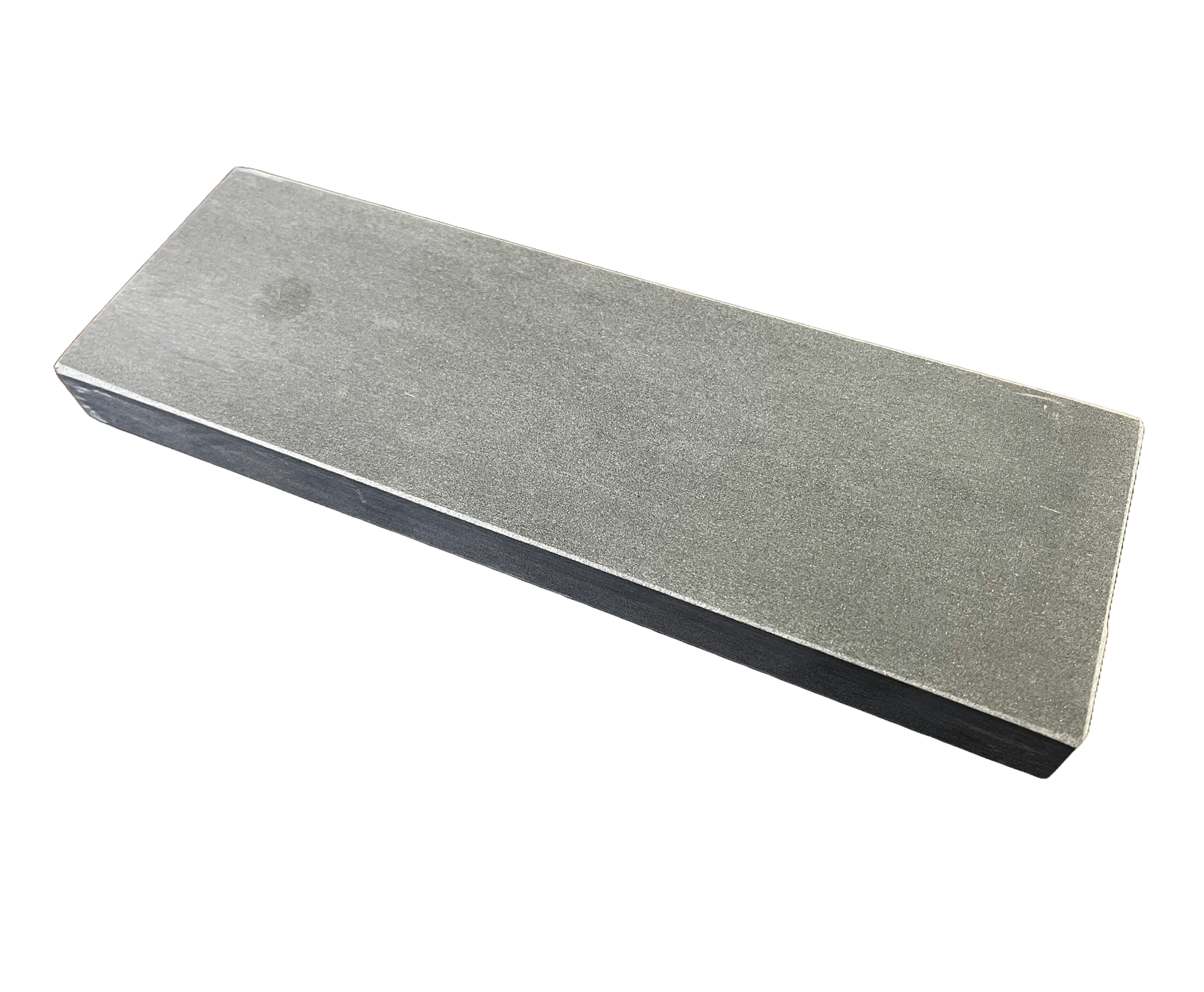


Large sharpening stone in natural sandstone quarried in Saurat, Pyrenean Mountains, France. Generous 240×80×20 mm format designed for comfortable bench or kitchen sharpening of wide blades. Use dry or with water. Local manufacture, exceptional service life.
 A question?
The team is at your disposal for all your questions.
 Delivery
Thanks to our carriers, we deliver everywhere in France and Europe.
 Secure payment
Visa, Mastercard...
A sharpening stone is above all a work surface. Too small, the blade tips and the sharpening angle is lost. Too narrow, a large kitchen knife or woodworking chisel overhangs on both sides. The woodworker's stone solves this problem: at 240×80×20 mm, it provides a wide, stable and comfortable surface for effortless sharpening, on the workbench or in the kitchen.
Cut from natural sandstone quarried in Saurat, in the French Pyrenees, it has a consistent grain and even bite across the entire surface — qualities that synthetic stones rarely reproduce with the same reliability. It is used dry or dampened with water: with water for gradual, precise sharpening on fine blades; dry for quickly recovering a dull edge. Its longevity is remarkable — properly maintained, it lasts for decades.
BENEFITS
✅ Large format 240×80×20 mm — wide, stable surface, blade guided along its full length ;
✅ Comfortable to use — no need to balance a blade on a small surface ;
✅ Natural Pyrenean sandstone (Saurat) — consistent grain, even bite, exceptional service life ;
✅ Dry or wet use — gradual sharpening or quick recovery as needed ;
✅ Versatile — kitchen knives, chisels, gouges, planes, garden tools ;
✅ Leave on the bench or in the kitchen — always ready, never in the way ;
✅ Local extraction — French sandstone, environmentally responsible.
HOW TO USE
MAINTENANCE
FAQ
Why does the 240×80 mm large format genuinely improve sharpening comfort?
On a small stone, a long blade overhangs on both sides — the sharpening angle is hard to maintain and the stroke becomes unstable. On 240×80 mm, a large chef's knife, a woodworking chisel or a plane blade rests fully supported without overhang. The stroke is smoother, the angle more consistent, the result cleaner. It is the difference between a stone you reach for in a pinch and one you leave permanently on the bench or kitchen worktop.
Is this stone suitable for kitchen knives?
Yes, it is one of its main uses. Its wide surface guides chef's knives, santoku or filleting blades with ease. With water, the grain releases a gradual sharpening ideal for kitchen steels — without removing too much material. For Japanese knives with very hard steel, use strictly with water and an appropriate sharpening angle (often 15° rather than 20°).
Should this stone be used dry or with water?
Both work. With water, the glide is smoother and grain releases slowly — ideal for finishing and fine blades. Dry, the abrasion is stronger — useful for quickly recovering a very dull edge. For first use, soaking in water for a few minutes is recommended.
What is the difference between this stone and the Affut'Cap 25 cm?
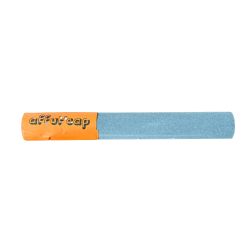
The woodworker's stone is a large-format natural stone, designed for bench or worktop sharpening — wide tools, kitchen knives, chisels, gouges. The Affut'Cap 25 cm is a reconstituted corundum stone, longer and narrower, designed for handled tools used in the field (scythes, sickles, billhooks). The two are complementary.
Data sheet
You might also like
Large sharpening stone in natural sandstone quarried in Saurat, Pyrenean Mountains, France. Generous 240×80×20 mm format designed for comfortable bench or kitchen sharpening of wide blades. Use dry or with water. Local manufacture, exceptional service life.