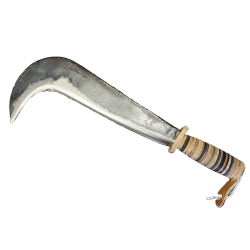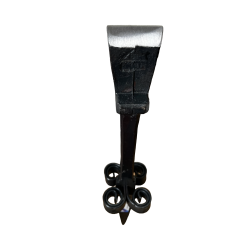
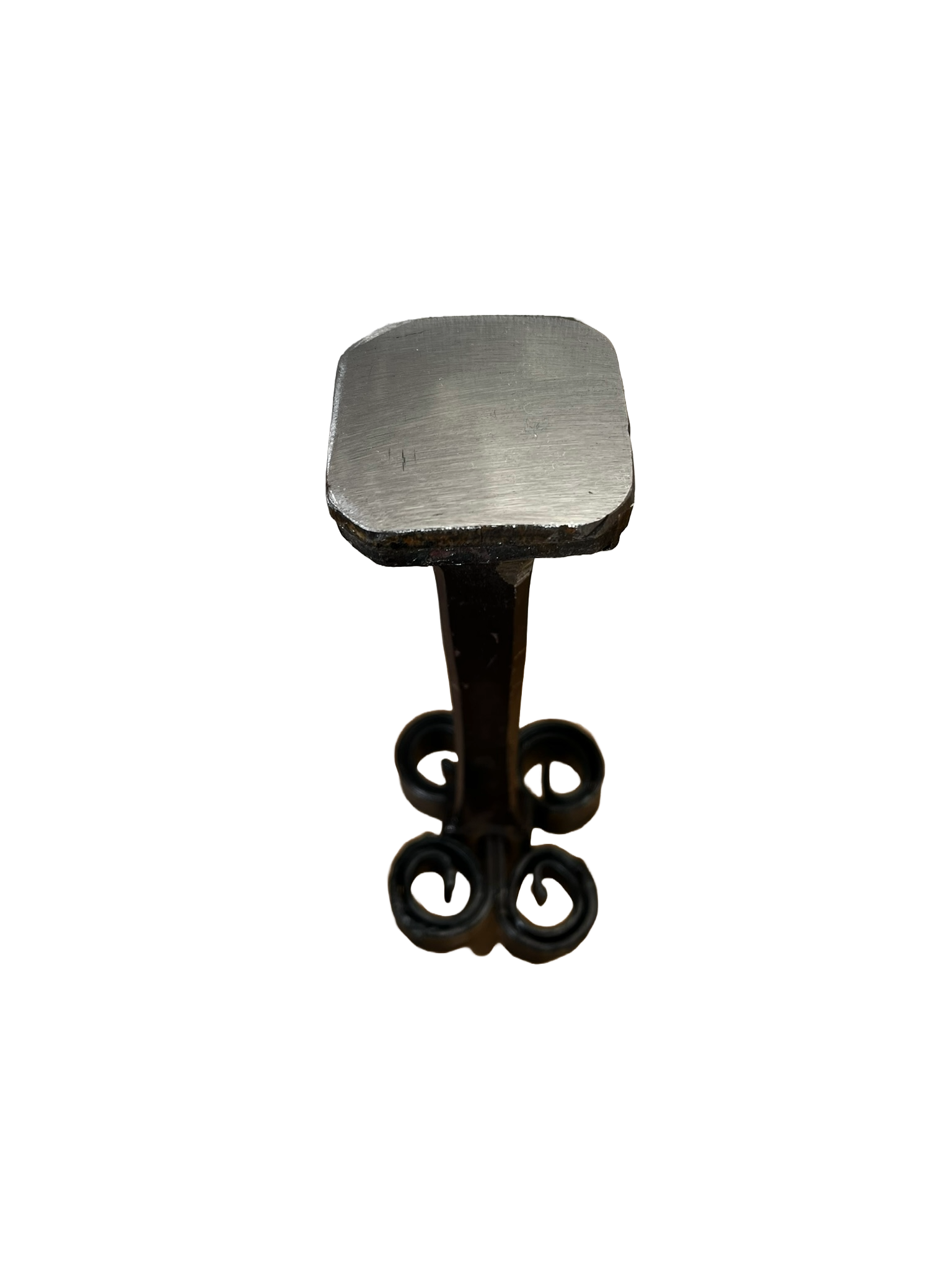


The essential tool for peening your scythes: the Rinaldi square anvil is designed to be driven straight into the ground or into a block. Hand-forged in Italy, it is used with the Rinaldi flat hammer.
 A question?
The team is at your disposal for all your questions.
 Delivery
Thanks to our carriers, we deliver everywhere in France and Europe.
 Secure payment
Visa, Mastercard...
The Rinaldi square anvil is the essential tool for peening your scythes. Designed to be driven straight into the ground or into a block, it lets you peen the scythe in the field or in the workshop. Its working surface of about 5 cm, in high-strength hardened steel, is designed to withstand repeated blows.
It is best used with the Rinaldi flat hammer. It can also be used to straighten the blade of a hoe and as a support for joinery or cabinetmaking work.
This is a handmade tool and may show irregularities in appearance: they do not affect its performance and make each piece unique.
Sold individually.
| Rinaldi tool | Type | Working surface | Weight | Used with |
|---|---|---|---|---|
| Square anvil | Anvil to drive in | approx. 5 cm | 1.243 kg | Flat hammer 500 g |
| Flat hammer 500 g | Peening hammer | approx. 3.5 cm | 668 g | Square anvil |
| Flat anvil | Anvil to drive in | approx. 4 cm | 1.295 kg | Square hammer 500 g |
| Square hammer 500 g | Peening hammer | approx. 2.5 cm | 654 g | Flat anvil |
The square anvil is best used with the Rinaldi flat hammer. The flat anvil, for its part, goes with the square hammer.
Peening a scythe means hammering the edge on an anvil to thin it and restore its sharpness. You use an anvil and a peening hammer, then finish sharpening with a stone.
Both are possible. Driven into the ground, the anvil lets you peen the scythe right in the field; driven into a block, it offers better ergonomics, in the workshop for example.
Both Rinaldi anvils are used for peening scythes and can be driven into the ground or a block. The square anvil, with a surface of about 5 cm, is used with the flat hammer; the flat anvil, about 4 cm, with the square hammer.
Data sheet
You might also like
The essential tool for peening your scythes: the Rinaldi square anvil is designed to be driven straight into the ground or into a block. Hand-forged in Italy, it is used with the Rinaldi flat hammer.